

Interview: Brian Walker on the “PASSIO” Album, TikTok Growth, and Unfiltered Songwriting
From his childhood bedroom on a farm in New Hampshire, Brian Walker is crafting a sound that defies standard genre lines. Blending pop, funk, and indie influences, his music has been described as “emotional catharsis on the dance floor.” With over 800 live shows across New England under his belt, Walker has spent years honing not just his sound, but his understanding of what makes an audience move.
Currently, Walker is gearing up for the release of his debut LP, PASSIO, a project that showcases a remarkably mature, unfiltered, and edgy creative voice. He handles the writing, production, and mixing entirely on his own, creating a deeply personal narrative that extends beyond the audio and into highly produced, narrative-driven music video trilogies.
RTRP Radio recently connected with Brian to discuss the realities of independent production, the vulnerability of sharing raw lyrics, and how a cold crowd at a local bar is the ultimate test of a good song.
The Farmhouse Studio & Creative Process
RTRP Radio: You still record in your childhood bedroom on a farm in New Hampshire. While many artists chase big city studios, what is it about that specific space that helps you tap into your best music?
Honestly, it’s mainly about saving money. It also gives me more flexibility during my days and weeks to record when I want. But I do hope some day I will be able to record in those big city studios and work with a team that can elevate my music to the next level and streamline my process. What I’m doing makes sense for me at this point in my career.
I also come up with almost all my best song ideas when I’m driving to gigs, so I guess that’s my most creative space—when I’m alone and contemplative.
RTRP Radio: Handling the writing, production, and mixing yourself is a massive undertaking. How do you know when a song is truly “done,” and is it hard to stay objective when you’re the only one making the creative calls?
It is quite the undertaking for sure. Since I am doing all three, I guess it makes sense to break it down that way as well. For the songwriting, I usually start with a song title and write the chorus, and if I like that, I work backwards and finish the song. The songwriting component is done when there’s melodic and/or harmonic contrast between sections and a chorus that feels like a chorus, and there’s no super cringey or generic lyrics. I’m always trying to chase the chills or the excited feeling in your gut that says you have something special.
With the production, the big thing for me is that it needs to feel like it evolves and builds to a climax. I need to make sure the track feels full as well, and the kick cuts through, and there’s no part of the track that feels empty or hollow.
For the mix, I use A/B metric and try to get it as close to my reference tracks as possible. I might have one track I’m referencing for vocal production, and another for the kick, etc. Once it feels pretty close on all speaker systems, it’s pretty much done. I don’t think it’s super hard for me to stay objective—I’m pretty good at isolating my analytical and emotional parts of my brain and tapping into them when needed.
I don’t always get it right, but I get tons of feedback from fans, friends, family, SubmitHub, my live shows, etc., so I sort of see what’s working and what isn’t and try to make adjustments for the next song if possible. I just try to make the best decisions I can and write the best songs I can with the information I have, and try to make my next song or album better than the previous ones.
Visual Storytelling & The Trilogy
RTRP Radio: Your music videos are more like short films than standard clips. Do you start seeing the “movie” in your head while you’re writing the first few chords, or does the visual narrative come after the song is finished?
I actually try not to think of the music video during the songwriting phase. When I’m coming up with song ideas, it’s most typically on long, late-night drives back from gigs, where I’m alone and can dive into my thoughts and emotions. I’m usually not trying to write a song—I’m just thinking about life and things that are happening, and then I say something in my head and go, “Wait! That could actually be a song!” And then I quickly try to make it a song title and a chorus so I can decide later if I want to finish it.
I try not to even think about the music videos ’til later. Especially lately, I’ve been sort of pulling back on music videos and doing more visualizers (like an 8-second loop video), so not every song necessarily will have a video. If the budget looks like it’ll be there and I’m really loving a song, then I’ll sort of daydream music video concepts while I’m driving to gigs as well, not all too different from my songwriting process. But I’m sort of leaning towards only doing music videos if the song has had some traction now.
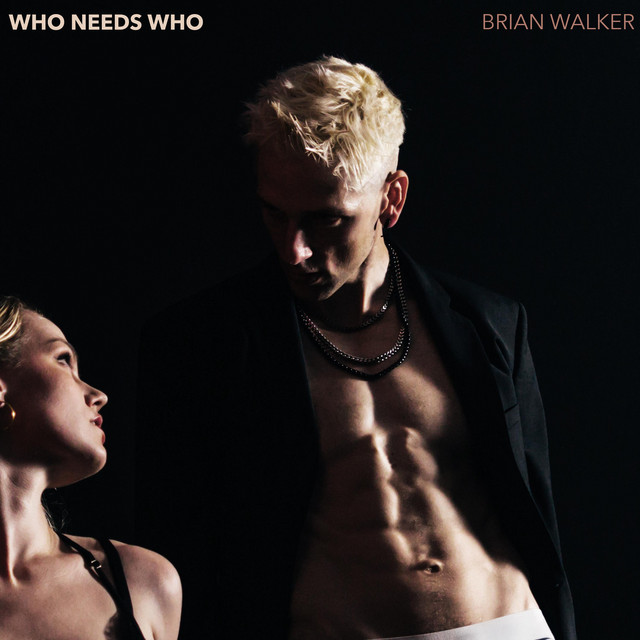
RTRP Radio: “WHO NEEDS WHO” finally closes out the story you’ve been telling since “When I Start to Care.” How did it feel to let that “runner” character reach the finish line of self-worth in this video?
Yes, it was quite the journey—each video was filmed a year apart from each other, and it was so satisfying to wrap up my first ever music video trilogy. It never intended to be more than just one isolated video, but once I had “I Like This Me Better”, it felt like the perfect song to flip the narrative of “When I Start to Care”. In my real life, I was finding myself distancing myself from the version of me that wrote “When I Start to Care”, so it felt perfect to have the “I Like This Me Better” music video literally end the opposite of “When I Start to Care” where the roles get reversed.
Then with “WHO NEEDS WHO” I was in sort of a different place emotionally when I wrote that song. A big motivation for “WHO NEEDS WHO” was to try to write something catchier, hookier, and more driving than “I Like This Me Better” which was my favorite song off the album at the time, so really, that song was an attempt to one-up “I Like This Me Better” and try to visually end the music video trilogy with a bang.
Having it out now as a trilogy feels super satisfying to me, and it’s a project I’m super proud of. I don’t think I could’ve fathomed a 3-year music video trilogy when I set down to write the first song—it sort of just felt exciting to me as the album was progressing. As a side note, I also found it sort of interesting that every video says “1 Year Later” and we actually filmed each video 1 year later. To me, that makes the trilogy feel sort of profound, as I see myself grow up across the series.
Connecting with the Crowd & Finding the Edge
RTRP Radio: Critics describe your sound as “emotional catharsis on the dance floor.” Why do you think it feels better to process heavy personal feelings over a funky beat rather than a traditional slow ballad?
I always liked dance music. It just never felt authentic to me to write the type of lyrics you’d typically hear in many dance songs. When I wrote my first songs, I would write with a piano or acoustic guitar and just sing out what I felt.
Then at Berklee College of Music during my time there, I got more into the actual craft of songwriting and producing and what makes a song catchy and resonant, and that’s when I started gravitating towards dancier beats, and learning music production and mixing. And then the personal songwriting and lyric writing, which is basically my diary set to music, sort of just stayed with me.
I also do think ballads are more exposing to a vocalist. The fewer the elements in a production, the more of a magnifying glass there is to the elements that are present. That being said, I do have a pretty stripped-down, emotional ballad on PASSIO that will be dropping hopefully later this year.
RTRP Radio: Having played over 800 shows across New England, you’ve seen it all. What is the most unexpected thing you’ve learned about connecting with a live audience that you just can’t learn inside a recording studio?
Pretty much all the shows I’ve played have been in bars and restaurants. Usually, I’m playing for strangers who don’t know me, although I have had some fans come to shows just to see me in more recent years. But when you’re playing for a cold audience who doesn’t know you, it really teaches you what works and what doesn’t.
If people like you, they clap, and they tip you and maybe even buy a CD or follow you on social media. If they don’t, they may get up and leave, or use the bathroom when you play a boring song, or wince when you say a lyric that’s too edgy. If they REALLY like you, they may come to multiple shows, and travel to see you. You really get to see firsthand what is and isn’t working.
In a recording studio, it’s all “I think this is cool”, and “this might work” and you can be analytical and look at data or go with your gut, but you’re isolated from the fans. With all my live show experience, I feel like there’s a certain sense of actually knowing what works and doesn’t that’s sort of hard to replicate in any other environment. I’m hoping to incorporate that knowledge on my second album as well.
RTRP Radio: Looking back at your first release, Conflicted, compared to your work in 2026, what do you think is the biggest way your creative “voice” has matured?
I think my voice has become more edgy and more unfiltered “me” since “Conflicted” released. I feel like “Conflicted” was an authentic song for me, but sort of safe. It felt like a lot of pop artists could cut the song. I feel like I’ve sort of established this edgier, bolder identity with songs like “WHO NEEDS WHO” and “IMMA GET MINE” where it’s harder for me to imagine other artists singing those songs. They just feel very “me”.
That being said, I’m still learning and evolving my sound, and noticing that there is sort of a limit as to how edgy a song can be in order to resonate consistently with audiences. I feel like a lot of my songs sort of have the “unfiltered truth” in them, and I feel like that’s sort of becoming a part of my brand with the PASSIO album. In the future, I see myself embracing that core part of my brand, while also trying to soften the edge a bit on some of the songs that I want to resonate with a broader audience. I’m noticing so far from my live shows, that my song “I Like This Me Better” seems to sort of be that song with the broader appeal off the PASSIO album, and has actually started to trend a bit as a sound on TikTok.
RTRP Radio: Your lyrics are notoriously raw and personal. Was there a specific moment while writing this latest project where you hesitated, wondering if you were sharing too much information?
I think my natural tendency might be to push it a little too far. I sort of like to test the boundaries to see how far I can go and get away with it—that edginess is sort of a part of my brand, at least with the PASSIO album. With “WHO NEEDS WHO” I didn’t feel like I was sharing too much information, but it did feel like the edgiest, boldest song on the album. If there was one song that I thought might shock people or cause them to double-take, it was this song, especially with the music video. It definitely showcased a side of my personality that I hadn’t really shown too much in my music and videos.
But that’s also what excites me. I enjoy testing the boundaries to see how far I can go and still have it be a hit song and widely accepted. And if people seem uncomfortable and don’t like it, I definitely take that into consideration when I start my next project. But being super safe all the time just isn’t that interesting to me. I like it when I put out a song and my heart’s racing because I don’t know if I went too far and how people are going to react—it’s nerve-wracking and scary but also super exciting.
I had a blogger who heard “WHO NEEDS WHO” say she went through the exact same thing and had never felt so “seen” in a pop song, and to me that’s the best compliment I can get with any of my music—to be able to write my truth and have someone else connect to it that deeply. It also sort of validates my own experience and makes me feel less alone and I’m sure she felt the same way. Nothing beats that feeling, and it’s the primary reason behind why I make music. If I played it safe, then I would’ve never experienced that connection like that.
Influences & What’s Next in 2026
RTRP Radio: Your sound is a unique blend of pop, funk, and indie. If you had to name three artists—past or present—who most influenced the “Brian Walker” brand, who would they be?
I grew up watching the VH1 Top 20 video countdown every week as a teenager, so that’s probably why I love music videos so much. I’m sure all of that music inspired the art I make today.
Recently, I’ve been trying to level up my piano playing and I’ve been getting really into Billy Joel. I have a lot of respect for the Beatles and their ability to write super catchy, accessible pop melodies and evolve their sound over time. Some of their songs can sound sort of easy and simple to the ear, but then you realize the harmony is actually a bit more intricate than the standard I-IV-V progressions, and they do bluesy stuff and dominant chords. And also, it can SOUND simple, but to actually MAKE something that sounds that simple takes a lot of discipline and craft. Their pop songwriting ability and sense of hits was just incredible, as well as their cultural influence.
Elvis is someone I really admire too. He just has this effortless swagger and an amazing voice and he embraced his own identity even when there was pushback about his dance moves. I really like the bold, edgy innovators who are unapologetically themselves and test the boundaries.
RTRP Radio: Now that the visual trilogy is wrapped and the album is on the horizon, what is one major “bucket list” goal you’re aiming to hit before the year ends?
I want to release the rest of my debut LP! I have 5 songs left to wrap up the PASSIO album, and I’ve also started posting 3 videos per day on my new TikTok channel @itsBrianWalker, so I’m hoping to get the album released, and build up my fanbase on TikTok so there are people waiting to hear the album when it’s done!
Leave a Reply