Boyz II Men vs. Jodeci: The Ultimate 90s R&B Versus Battle
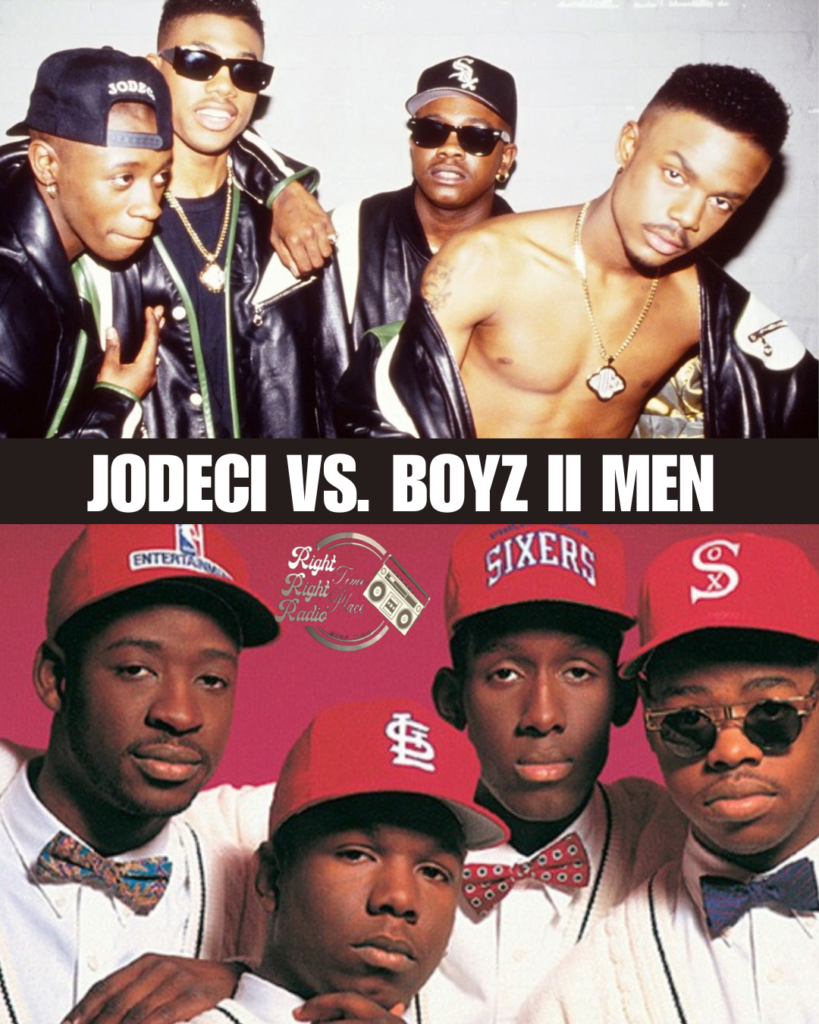
The 1990s represented the absolute golden age of contemporary R&B vocal groups, a period when the genre commanded supreme dominance over the global music charts and drove the cultural zeitgeist. As the pristine, fast-paced production styles of late-1980s New Jack Swing began to synthesize with the booming, gritty drum loops of an expanding hip-hop empire, a fascinating sonic divide emerged within the urban music landscape. On one side stood an unyielding philosophy of sophisticated classical harmonization, flawless vocal control, and cross-generational pop appeal. On the other side stood a vulnerable, raw, church-reared passion that injected unfiltered street energy and hip-hop swagger directly into traditional love songs. This ideological and musical friction is best personified by the two undisputed titans of the decade: Boyz II Men and Jodeci.
Pitting these two legendary collectives against one another in a song-for-song versus battle is more than just a superficial comparison of chart positions or unit sales; it is a profound examination of the very soul of 90s rhythm and blues. For digital publishers, entertainment bloggers, and radio programmers, leveraging this historic rivalry is a proven method for generating massive online traffic and driving highly passionate comment-section debates. By analyzing the structural foundations, distinct aesthetics, and landmark achievements of both entities, audiences across multiple generations—from the baby boomers who appreciated the classical arrangements to the millennials and Gen Z listeners who continue to sample their catalogs—are drawn into a captivating conversation about who truly owned the era.
Boyz II Men: The Architects of Technical Perfection
Emerging from the prestigious Philadelphia High School for Creative and Performing Arts, Boyz II Men—originally consisting of Nathan Morris, Wanya Morris, Shawn Stockman, and Michael McCary—completely redefined the commercial boundaries of vocal group crossover success. Discovered in a backstage dressing room by New Edition’s Michael Bivins, the group signed to Motown Records and burst onto the global landscape with their 1991 debut album, Cooleyhighharmony. The project introduced a pristine, highly organized vocal architecture that relied on a precise blueprint: intricate four-part acappella-grade harmonies anchored firmly by the deep bass register of Michael McCary, smoothly transitioned through the rich mid-tones of Stockman and Nathan Morris, and punctuated by the soaring, highly emotional tenor leads of Wanya Morris. While up-tempo singles like “Motownphilly” proved their ability to dance and execute commercial new jack swing, it was their monumental execution of heartfelt ballads that permanently etched their names into the annals of music history.
In 1992, the group contributed “End of the Road” to the Boomerang motion picture soundtrack. The record did not merely top the charts; it executed a total commercial takeover, spending an unprecedented 13 consecutive weeks at number one on the Billboard Hot 100 and shattering a 36-year-old historic record previously held by Elvis Presley. Far from a singular lightning-strike moment, Boyz II Men proved their absolute pop dominance with their multi-platinum 1994 follow-up album, II. The lead single, “I’ll Make Love to You,” claimed the number-one position on the pop charts for 14 weeks, only to be immediately replaced at the top spot by their subsequent single, “On Bended Knee.” This phenomenal feat marked the first time since the Beatles that an act had replaced itself at number one on the American charts. By balancing sophisticated, pristine ivory-league styling with flawless, unblemished vocal deliveries, Boyz II Men secured unparalleled crossover appeal, performing in massive sports arenas, international telecasts, and attracting a diverse global listener base that spanned all ages and demographics. Their definitive 90s hits include:
- “End of the Road” (1992) – The record-shattering heartbreak masterpiece that redefined the modern pop ballad structure.
- “I’ll Make Love to You” (1994) – A masterclass in romantic, cinematic pop-R&B crossover production.
- “On Bended Knee” (1994) – An emotionally desperate, vocally layered track that solidified their chart dominance.
- “Motownphilly” (1991) – The high-octane track that perfectly bridge classical harmony with hip-hop beats.
- “Water Runs Dry” (1995) – An acoustic-driven display of vocal restraint, showing their artistic maturity.
Jodeci: The Masters of Raw Street Passion and Grit
While Boyz II Men captured the hearts of mainstream pop radio with their tailored suits and clean-cut image, Jodeci rose from the underground to capture the raw energy, posture, and unfiltered emotion of the urban streets. Hailing from Charlotte, North Carolina, the quartet was uniquely comprised of two sets of biological brothers: DeVante Swing (Donald DeGrate), Mr. Dalvin (Dalvin DeGrate), K-Ci (Cedric Hailey), and JoJo (Joel Hailey). Deeply rooted in the Southern Pentecostal gospel tradition, the brothers traveled to New York City with nothing but raw talent and a demo tape, eventually securing a deal with Andre Harrell’s legendary Uptown Records. Under the visual and cultural guidance of Harrell and a young, ambitious executive named Sean “Puffy” Combs, Jodeci completely dismantled the traditional aesthetic expectations of the contemporary R&B male vocal group. Dressed in sagging jeans, heavy leather combat vests, dark sunglasses, and Timberland boots, they injected a potent, uncompromising hip-hop attitude directly into soul music.
The sonic landscape of Jodeci was entirely constructed by the visionary production and arrangement style of DeVante Swing. On their 1991 debut album, Forever My Lady, DeVante introduced a darker, heavier, bass-driven rhythm section that utilized swinging hip-hop cadences. This heavy instrumentation served as the perfect canvas for the volcanic, church-inflected, raspy lead vocals of K-Ci and the sweet, pleading textures of JoJo. Hit singles like “Come & Talk to Me” and the title track established them as an instant cultural force. In 1993, they expanded their legacy with the complex, experimental masterpiece Diary of a Mad Band, which yielded the monumental smash “Cry for You.” This particular song became a massive historical milestone for the group, dominating the Billboard R&B charts for four consecutive weeks and peaking at number 15 on the mainstream Hot 100, proving that their uncompromised grit possessed immense commercial power on its own terms. By the time they dropped the highly sensual 1995 album The Show, the After Party, the Hotel, featuring the explicit anthem “Freek’n You,” Jodeci had permanently established the “Bad Boy of R&B” archetype, creating a permanent blueprint for future groups like Dru Hill, Jagged Edge, and Next. Their definitive 90s hits include:
- “Cry for You” (1993) – A powerful, emotionally exhausting showcase of K-Ci’s raspy, gospel-style vocal delivery.
- “Come & Talk to Me” (1991) – The definitive mid-tempo R&B courting anthem that came to define 90s slow jams.
- “Freek’n You” (1995) – An uncompromisingly bold, late-night anthem that merged explicit sexuality with beautiful chords.
- “Forever My Lady” (1991) – A foundational, elegant slow jam that balanced hip-hop baselines with classic soul melodies.
- “Stay” (1991) – An intricate, pleading ballad showcasing DeVante Swing’s brilliant structural arrangement skills.
The Song-for-Song Scorecard: Settling the Debate
To facilitate an interactive voting experience across social channels, this versus battle is broken down into four highly calculated rounds. By aligning these songs by their specific sonic intent and emotional weight, publishers can encourage users to vote on a round-by-round basis, forcing a choice between vocal perfection and street passion.
Round 1: The Heavyweight Ballads — Boyz II Men’s “End of the Road” versus Jodeci’s “Cry for You.” This is a direct clash between the single most commercially successful heartbreak pop record of the decade and the most emotionally agonizing, gospel-infused street ballad of the era.
Round 2: The Late-Night Classics — Boyz II Men’s “I’ll Make Love to You” versus Jodeci’s “Freek’n You.” A fascinating study in stylistic contrasts. Boyz II Men approaches romance with elegant, candle-lit sophistication, while Jodeci delivers a raw, direct, and completely unvarnished hip-hop seduction anthem.
Round 3: The Smooth Radio Grooves — Boyz II Men’s “On Bended Knee” versus Jodeci’s “Come & Talk to Me.” Both tracks dominated urban radio formats for months, representing the absolute pinnacle of mid-tempo 90s R&B song-writing and smooth vocal delivery.
Round 4: The 1991 Breakout Anthems — Boyz II Men’s “Motownphilly” versus Jodeci’s “Forever My Lady.” The final round pits the energetic, high-octane introduction of the Philadelphia harmony sound against the smooth, timeless title track that launched the North Carolina brothers into absolute superstardom.
The Versus Week Schedule
To settle this debate once and for all, RTRP RADIO is rolling out a 4-round battle across our social media platforms. Make sure you are following our daily posts to drop your votes in the comments and defend your era:
- Round 1: The Heartbreak Anthems — “Cry for You” vs. “End of the Road”
- Round 2: The Bedroom Classics — “Freek’n You” vs. “I’ll Make Love to You”
- Round 3: The Smooth Radio Grooves — “Come & Talk to Me” vs. “On Bended Knee”
- Round 4: The 1991 Breakthroughs — “Forever My Lady” vs. “Motownphilly”
Great content! Keep up the good work!