A familiar song can become a doorway, or it can become a wall. If “Fast Car” is the only Tracy Chapman recording you know well, her self-titled debut offers a reason to keep listening after that unmistakable guitar figure fades. Across a compact album, Chapman moves between public injustice and private vulnerability without making either feel like a separate subject.
Rhino dates the album’s release to April 5, 1988. The original album listing contains eleven songs in roughly thirty-six minutes. That scale makes it a good candidate for a complete listen: long enough to build a world, short enough to hear how one song changes the atmosphere around the next.
Start with the voice, then widen the frame
“Talkin’ Bout a Revolution” opens the record with a directness that gives the listener little distance from its concerns. “Fast Car” follows, shifting toward an individual story and the complicated promise of escape. Rather than treating the second track as an isolated hit, listen to the movement between them. One song looks outward; the next brings large pressures into the shape of a personal hope.
That is one useful way into the album, rather than a rule about what every listener should hear. On your first pass, notice where your attention goes: the guitar, the rhythm section, the grain of Chapman’s voice, or the unfolding situation. On a second pass, choose the element you noticed least. Familiar recordings often change when the listening task changes.
Let the quieter moments hold their space
“Behind the Wall” makes a particularly sharp change in texture. Its unaccompanied vocal asks the listener to sit with an account of domestic violence without the cushion of an instrumental groove. It is a difficult moment, and the absence of a band matters as much as an arrangement elsewhere might.
“Baby Can I Hold You” offers another kind of exposure. The emotional scale becomes intimate, with communication itself at the center. Placed within the album, it can feel less like a detour into a love song than another examination of how hard it is to reach another person.
Finish the album before choosing a favorite
The second half deserves the same attention as the opening run. Try “Mountains o’ Things” and “For My Lover” before returning to the best-known single. Listen for changes in momentum and perspective, and ask which songs gain force from the ones beside them.
Chapman’s debut does not need a new anniversary to be worth revisiting. Its value as a listening experience is in the details: a change of texture, a carefully held phrase, a story that does not resolve as easily as its melody might suggest. Play the record in order, then choose one less-familiar song to hear again. Which track changes your understanding of “Fast Car”?
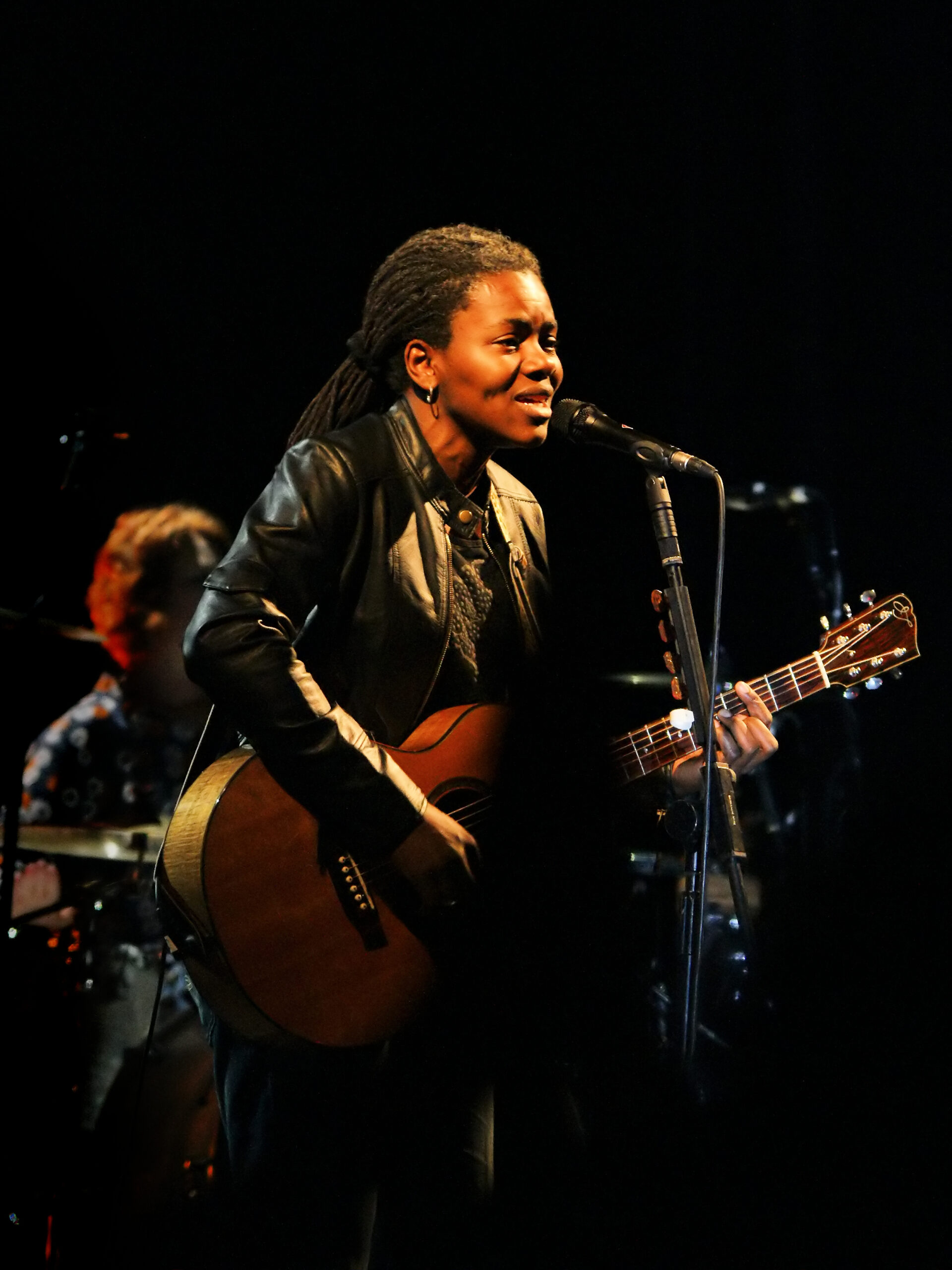
Archival photograph: Tracy Chapman at the Cactus Festival in Bruges, Belgium, July 10, 2009. © Hans Hillewaert. Photo source; CC BY-SA 4.0. Photograph shown from a later performance, not the 1988 album sessions.
